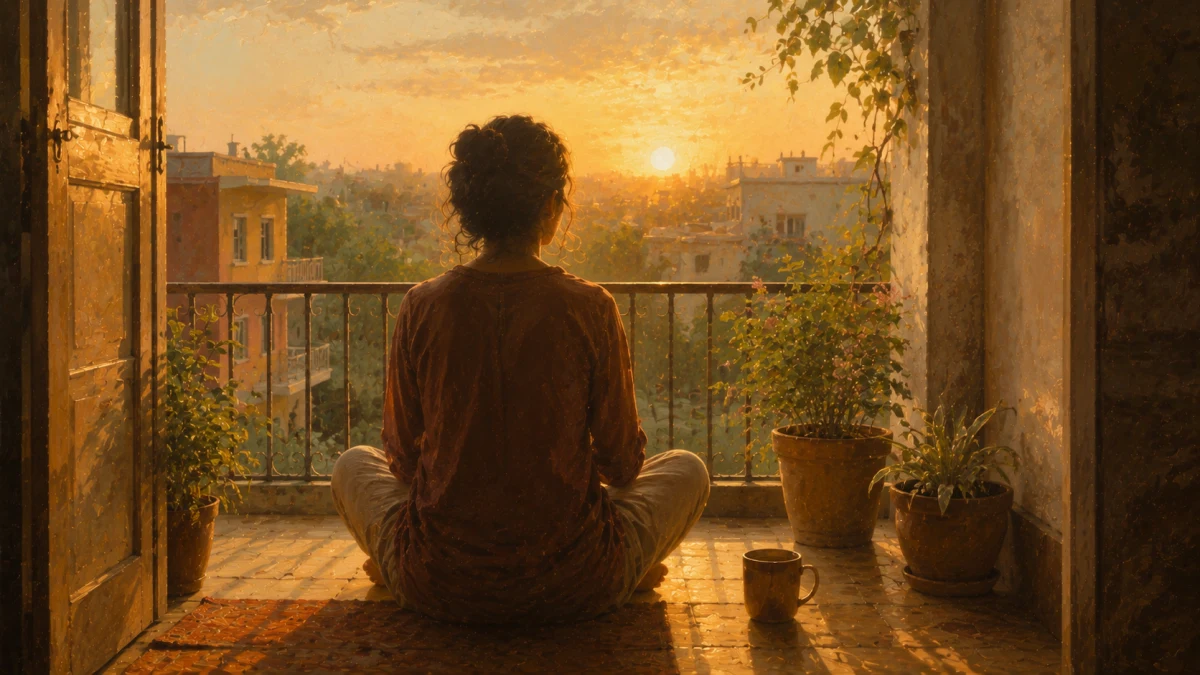
The Secret to Living Like a Yogi Has Nothing to Do With Yoga
Living like a yogi isn't years of practice or a library of scripture. What it actually takes, why it's harder than it sounds, and what it looks like day to day.
Noble Srinivasan
Founder, Muladhara Yoga Wellness
There's a version of "living like a yogi" that gets sold constantly: years on a mat, a library of scripture, a move to an ashram somewhere far from your actual life. None of that is where it actually starts. The people who genuinely have this figured out are rarely the ones who look like the postcard image. They tend to look ordinary. What's different about them isn't something you could easily photograph.
The Whole of Holistic Wellness, Actually, Is Simple
Respect your time. That's most of it. Time isn't just a resource you spend, it's something that, when honoured rather than fought, gives something back. There's a kind of magic in simply eating, sleeping, resting, and working in rhythm with what the body is actually asking for at that hour, rather than what a schedule or a habit says should happen instead. People chase this feeling through countless external routes, supplements, rigid routines, expensive retreats, when so much of it is available for free, the moment you start paying attention to your own timing.
Living Like a Yogi Isn't Earned Through Years of Practice
There's a common belief that living like a yogi requires decades of tapasya, endless hours on the mat, and a stockpile of scriptural knowledge before it counts as real. It doesn't. What it actually takes is self-respect, and self-awareness turned inward rather than outward. The answers people spend years searching for outside themselves are usually sitting quietly inside, waiting to be noticed. Reflection isn't a side practice to yoga, it is largely the practice, and it tends to hand you the exact clarity that the noise of daily life keeps drowning out.
Why This Feels So Hard, Even Though It's Simple
If it's genuinely this simple, why does almost nobody actually live this way? Because the mind is built to run on autopilot, replaying old moments and rehearsing future ones, and breaking that loop takes active, repeated effort, not a single realisation. It's simple in the same way that breathing is simple, and yet most people spend a lifetime breathing shallowly without ever noticing. The good news is that noticing is the entire skill. Nothing else has to change first, not your schedule, not your circumstances, not your past decisions. Just the next moment of actual attention.
What Is "The Present," Really?
The present isn't a mystical state reserved for monks, it's simply this exact moment, the one happening as you read this sentence, before the mind jumps ahead to the next one or back to something from earlier today. Most people assume they're already living in it by default, since time only ever moves forward. But attention doesn't automatically follow time. The mind can be anywhere, rehearsing an argument that hasn't happened yet, replaying one that already did, while the body sits in a single, ordinary now that goes almost entirely unnoticed. Presence is just closing that gap, again and again, between where your attention actually is and where your body already is.
What Does It Actually Mean to Live in the Present?
People who genuinely look healthy and at ease usually aren't doing anything dramatic. They've simply stopped fighting the moment they're in. There's a real difference between looking well and actually carrying that steadiness, the kind that shows up as a feeling in a room before it shows up as anything visible. A person who is genuinely present carries a kind of energy that affects the space around them, not by force, but by presence itself. And that energy tends to only reach the people who are open to receiving it, it doesn't impose itself on anyone. The opposite is also true. A person carrying constant tension, resistance, or unresolved stress radiates that too, and it doesn't only wear on them, it touches everyone nearby, whether either side intends it or not.
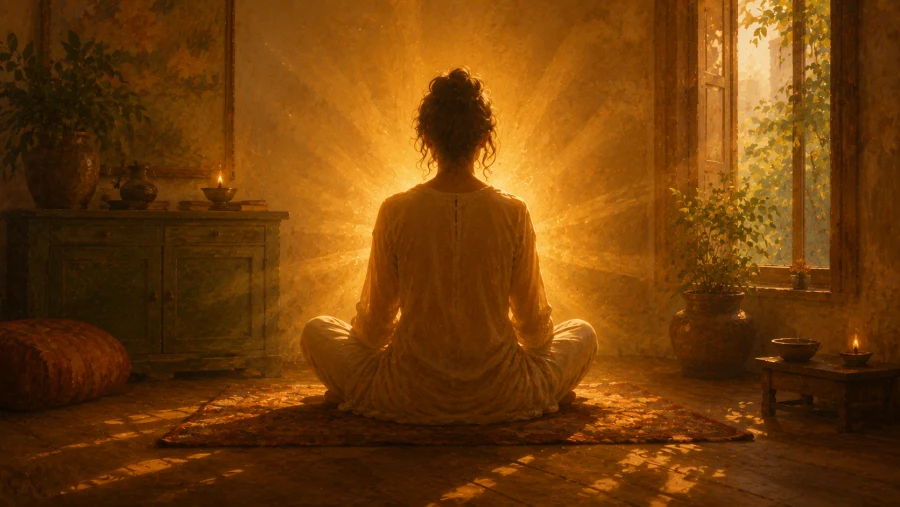
One of the simplest ways back into the present moment is also the oldest: the breath. Not a special technique, just the ordinary act of actually feeling the next inhale and the next exhale, rather than letting them pass unnoticed while the mind is somewhere else entirely. It takes about ten seconds, and it works every time, because the breath only ever happens now. It can't happen in the past or the future. Following it back, even for a few breaths, is often the fastest route back to the room you're actually standing in.
What This Actually Looks Like, Day to Day
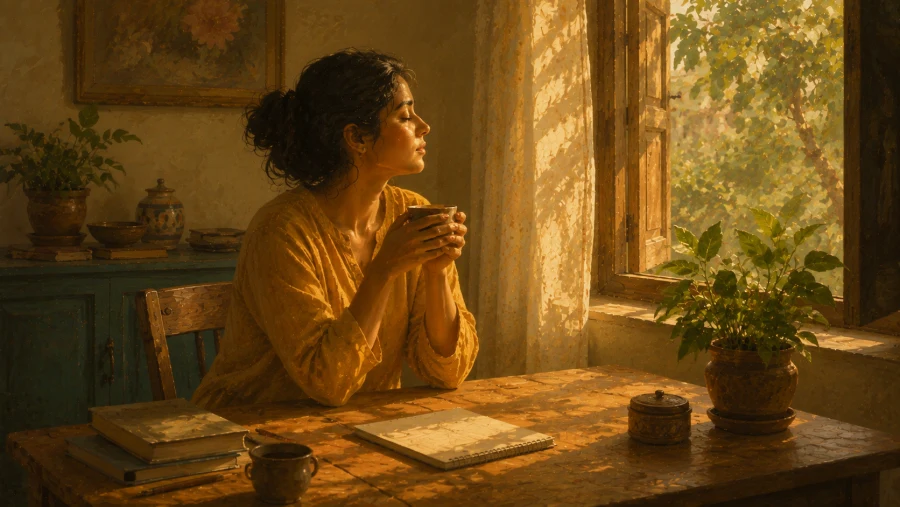
Concretely, it rarely looks dramatic. It's finishing a meal without scrolling through it. It's noticing irritation rise in traffic and choosing not to feed it for the next ten minutes. It's sitting with someone mid-conversation instead of half-formulating your next sentence while they're still speaking. It's going to sleep without replaying the day's mistakes on a loop. None of these are hard in isolation. What makes them rare is that almost nobody practises them on purpose, so the mind defaults to its oldest habit instead, living everywhere except right here.
Is Yogic Life Real? What Does a Yogi Actually Live Like?
Yes, and it looks far less dramatic than most people expect. A yogi's life isn't a permanent state of stillness on a mountaintop, it's an ongoing practice of returning, again and again, to the present moment, rather than living in a memory of what already happened or an anxiety about what hasn't happened yet. That's the whole practice. Not perfection, not detachment from the world, just a continuous, gentle return to now.
Choose that path today. Not tomorrow, not "when things settle down," today, because today is the only place this actually happens. There is no yesterday to fix and no tomorrow to control, there is only the present, and the truth is a difficult one, if you are not present, the past has no use and the future has no meaning, because there is no version of you actually there to receive either one.
None of this requires a retreat, a teacher, or a special place to begin, though all three can genuinely help once the practice is real. It starts with one honest moment of attention, right where you already are. If you're looking for a place to actually build this into a daily practice rather than just read about it, our yoga sessions and courses and community are built around exactly this, starting from wherever you are, not from where a postcard says you should be.
More to Read

You're Not Afraid of Acupuncture, You're Afraid of a Memory From Childhood
Aug 26, 2026
Enhance Your Yoga with a Mindful Diet
Aug 1, 2026
Explore Yoga Asanas: A Comprehensive Guide to Poses and Practices
Aug 1, 2026
Meditation Techniques for Beginners
Aug 1, 2026
The Timeless Science of Yoga
Aug 1, 2026

An Introduction to Pranayama
Aug 1, 2026
0 Comments
Share your thoughts — comments are reviewed before appearing.
Leave a Comment